

KNOW BENASSAL
CASTLE OF LA MOLA
The Castillo de la Mola receives its name because it is located at the top of the small mill from which the oldest nucleus of Benassal is articulated. It is a construction from the 13th century, by order of the founder of Benassal Berenguer de Calatarrà, who received the Population Charter from Blasco de Alagón in 1239.
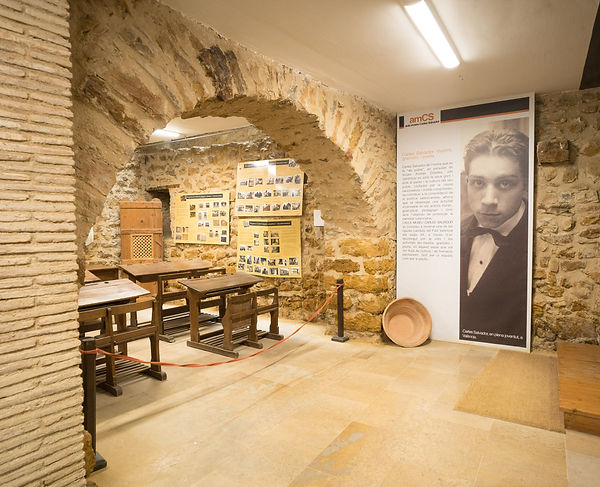
Originally, it was the residence of the founder of the town of Benassal, but it was also the meeting place for all the inhabitants of the term. Under the arches of the street, there was a church dedicated to Saint Augustine. Over the years, the Castillo de la Mola became Casa de la Villa and, later, served as a school. What was the Chapter House of the Villa today houses the Archaeological Museum of Alt Maestrat and in other rooms of the Castle we can find the tourist office and the Carles Salvador Classroom Museum.

ARCHES AND TOWERS OF THE WALL
To this day, Benassal still conserves a portal and three towers of the wall. The La Mola portal was the closest entrance to the Castillo de la Mola. This portal was built at the beginning of the 14th century, when the Templars managed the town. It is a Gothic style arch with influences from Muslim architecture, due to the historical Muslim roots of the town of Benassal.
Of the three towers, the only one accessible to visitors is the Jail Tower. It is a rectangular construction consisting of the tower and the semi-detached house, which in wartime and postwar times served as a police station.
CHURCH OF THE VIRGIN OF THE ASSUMPTION
The oldest part of the church was built in 1370 by the masters of the Order of Montesa. Years later, the watchtower attached to the church would become a bell tower and the original church would be expanded. During the seventeenth and eighteenth centuries, expansion works were carried out to have the church that we know today.
However, during the Spanish Civil War, specifically in May 1938, Benassal was bombed by Hitler's Condor Legion and the church was seriously damaged. As a result of the bombings, only the interior arcades and the main Baroque-style façade remained. The rebuilding of the church lasted until 1964.
FORN DE DALT
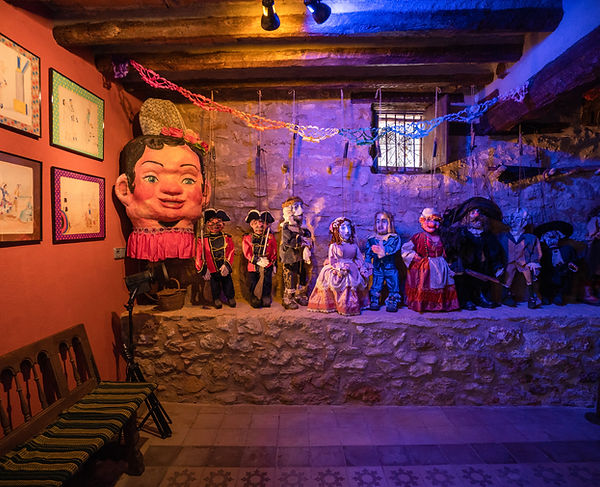
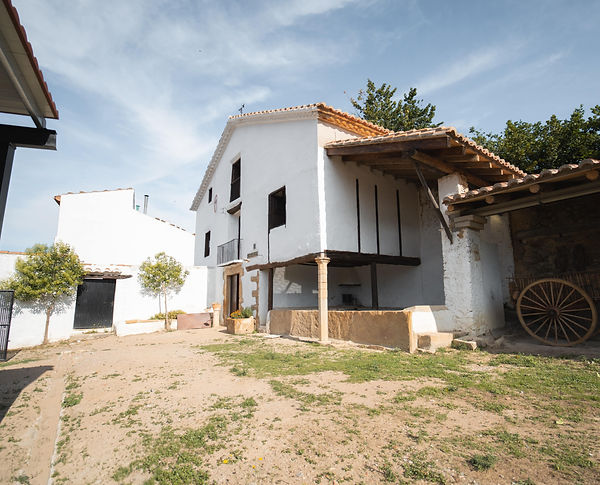
The “Forn de Dalt” is a medieval oven located very close to the Castle of La Mola. It was built at the beginning of the 14th century as the wall, the town and the services it offered to its inhabitants were extended. During the time of government of the Order of Montesa, the oven was sold to the Vives and Miralles families, two of the most influential noble families in Benassal. Later, the furnace would have municipal ownership that it would retain until the present time.
The oven was in full operation until the 1970s. During all those years, it served as a social meeting point for those who went to graze and bake bread, since it always functioned as a baking oven, not a bread sale. When it closed its doors, the building fell into disuse. In 2015 it was restored and since then it has been open to visitors and hosts activities of a cultural nature.
