BENASSAL
Benassal Tourist and Cultural Guild

KNOW BENASSAL
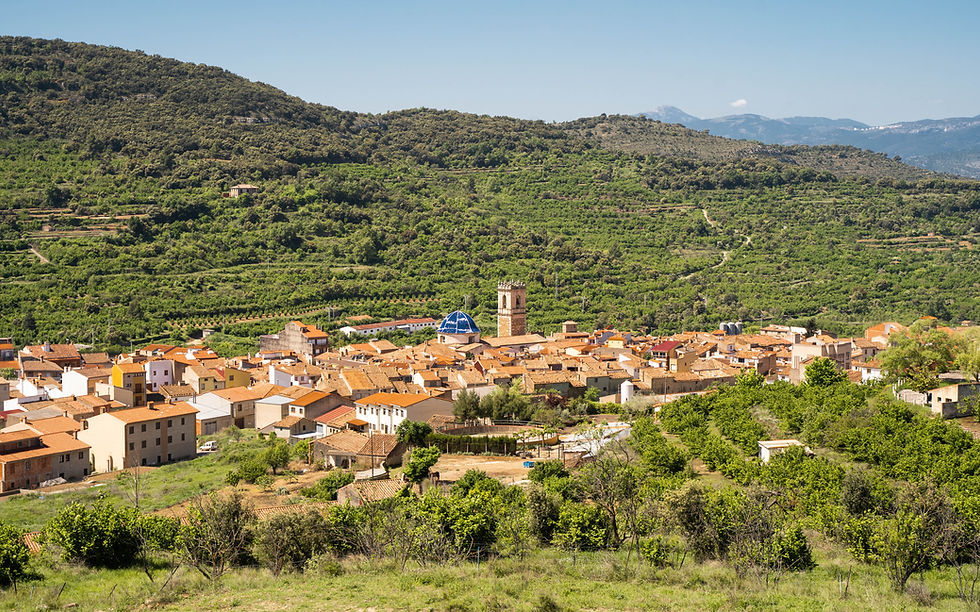
Located between 800 and 900 meters of altitude, Benassal is located in the northwestern half of the province of Castellón and is part of the Alt Maestrat region. It is located in a medium mountain area where the Iberian System and the Catalan mountain range converge. Benassal borders the municipalities of Vistabella, Villafranca, Ares del Maestrat, Villar de Canes and Culla.
Although the town of Benassal has its historical origins in Muslim times, the town we know today began to be built in 1239, when Blasco de Alagón granted the Population Charter to Berenguer de Calatarrá. Over the years, Benassal passed from the hands of the Templars to the masters of the Order of Montesa until it was incorporated into the royal crown.
Subsequently, the growth of the town would be based mainly on agriculture, livestock, textile manufacturing, commerce and tourism that was emerging and that would make Benassal a benchmark for tourists. At present, agriculture in Benassal is especially characterized by hazelnut crops, despite the growing presence of black truffles.
PATRIMONI HISTÒRIC
El centre històric de Benassal és un recorregut que mostra els llocs i monuments més emblemàtics de la localitat, per carrers estrets i d'estructura irregular on es conserven algunes de les cases més antigues de la vila.

CASTELL DE LA MOLA (13TH CENTURY)
It is the oldest civil building in Benassal and was built approximately between 1240 and 1250.
Castell de la Mola takes its name from its location at the top of the small flat-topped hill around which the oldest part of Benassal is organised.
It is Gothic in style and houses the Tourist Office, the Archaeological Museum of Alt Maestrat and the Carles Salvador Museum Classroom.

EL FORN DE DALT (14TH CENTURY)
The "Forn de Dalt" is a medieval oven located very close to Castell de la Mola. It was built in the early 14th century as the town walls, the town itself and the services it offered to its inhabitants expanded. During the period of rule by the Order of Montesa, the oven was sold to the Vives and Miralles families, two of the most influential noble families in Benassal.

COMMEMORATIVE MURAL (20TH CENTURY)
In the Town Hall Square stands the Commemorative Mural of the 750th anniversary of the Town Charter. It is an impressive sculpture by José Gonzalvo that commemorates the granting of the Town Charter by Balasc d'Alagó in 1239.

ARCHES AND TOWERS OF THE TOWN WALLS
Benassal still preserves sections of its old town walls, with three defensive towers and one of its entrance gates. The three imposing medieval towers are: the En Garcés defensive and watchtower, the circular Torre Redona and the Torre de la Presó, attached to the former prison, with a square floor plan, four storeys and a dungeon. The latter is the best preserved of them all and the only one open to visitors.

THE STUKA EXPERIMENT
The permanent exhibition on the bombings is located in the Torre de la Presó in Benassal. It covers the historical events of May 1938, when the German Condor Legion attacked several municipalities in Alt Maestrat as a testing ground for the Junkers Ju 87 Stuka aircraft.
CHAPELS AND PILGRIMAGES
Benassal has a rich tradition of chapels and pilgrimages, particularly notable for its devotion, natural surroundings and traditional cuisine.
ERMITA DE SANT CRISTÒFOL
Located at the summit of Moncàtil, the chapel is dedicated to Sant Cristòfor, one of the patron saints of Benassal. Every year, on Whit Monday, the people of Benassal make a pilgrimage to the chapel. On that day, it is traditional to eat in the surroundings of the chapel, sharing a dish of “tombet”, a stew made with rabbit, chicken and snails, with friends and family.

ERMITA DE SANT ROC
The chapel dedicated to the pilgrim saint, protector against the plague and one of the main patron saints of the town and the young men of Benassal, to whom great devotion was already shown in the 14th century. It is located approximately 3 km northwest of the town, at an altitude of 968 metres, crowning Coll d’En Timor, which is usually reached via the old path of “En Pedró i de la Solana”, now called “Sant Roc”, paved at the end of 1970.

ERMITA DE LA MAGDALENA
The chapel dedicated to Saint Mary Magdalene in Benassal was built in 1864 on the initiative of the philanthropist Magdalena Grau i Gras, who, after visiting Turkey, was inspired by Eastern culture to construct this building, making it one of the most unusual and recognisable chapels. It has an octagonal floor plan, with large buttresses at each corner topped with pinnacles and decorated with striking metal gargoyles.

ERMITA DE SANT LLIBORI
Originally, it was located in the spring square next to the La Primitiva building and was built in 1862. The chapel has been relocated to different locations within Font d’En Segures, but it was not until 1960 that the chapel was built in its current location.

ERMITA DEL LORETO
The Ermita del Loreto, built in 1626 and located at Pedrissa d’En Garguil, is a small chapel of traditional architecture with a bell gable, an arched porch and a single nave. A historic place that marks the beginning of the Stations of the Cross leading to the cemetery and forms part of Benassal’s cultural heritage.